Surf Scoter
Melanitta perspicillata
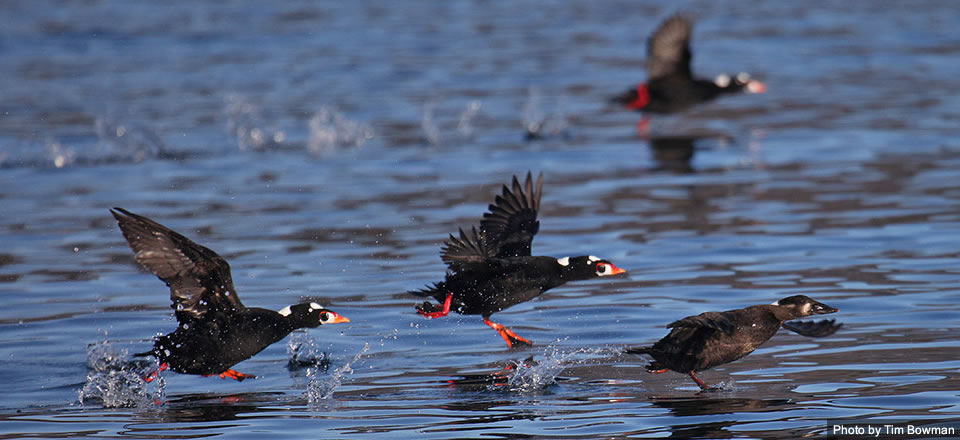
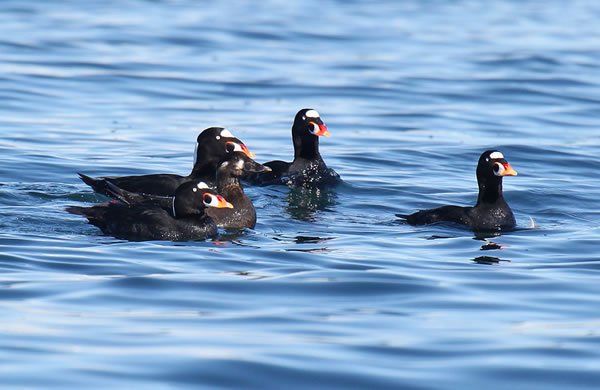
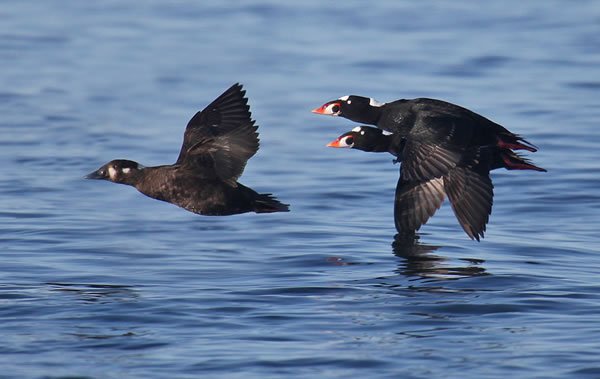
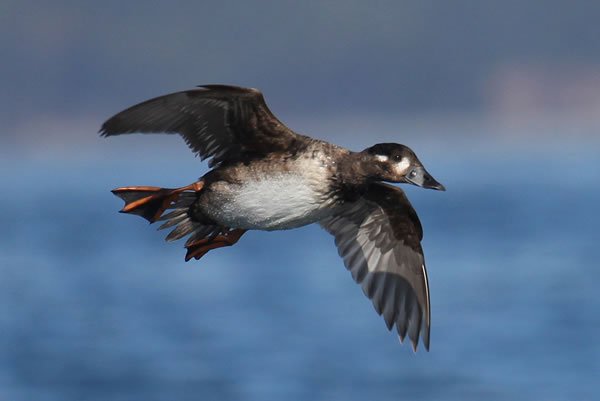
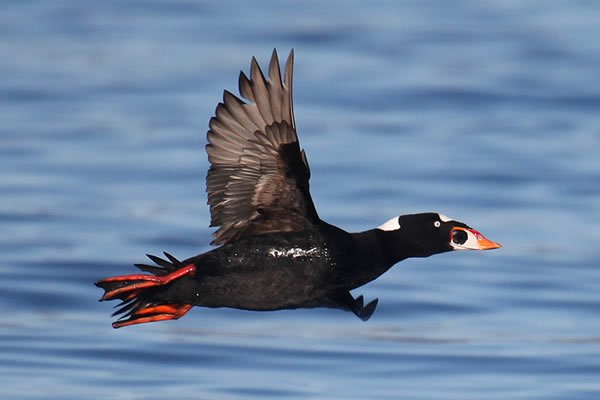
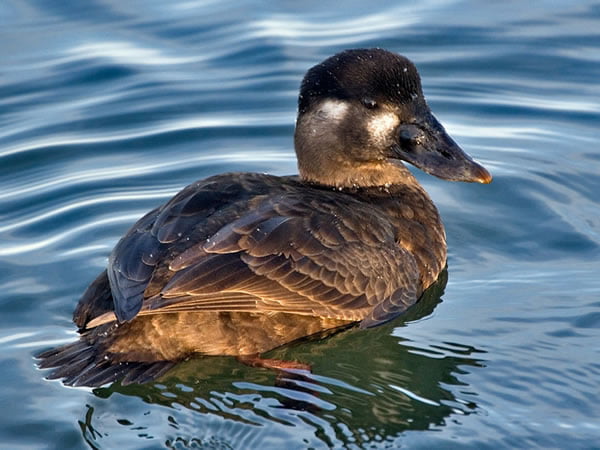
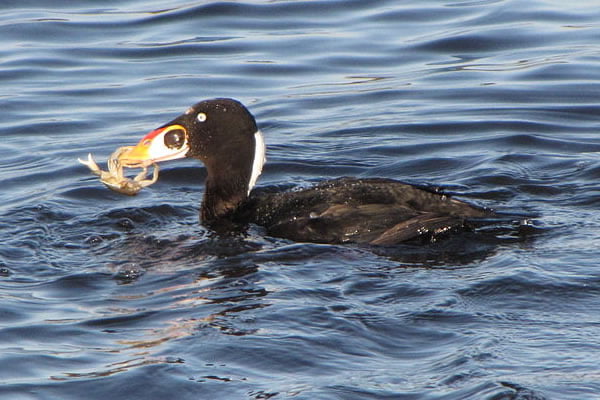
The surf scoter is a stout sea duck. Adult males weigh about 1050 grams (2.3 lbs) and females 900 grams (2 lbs). Adult males are distinguished by their bright, bulbous, multi-colored bills, lustrous velvety black plumage, and conspicuous white patches on the forehead and the back of the head/neck. In immature males, bill coloration is less dramatic than in adults and the white head patches tend to be either entirely absent or much smaller in size.
Sea Duck Information Series fact sheet
Surf Scoter Species Knowledge Summary and Information Needs [PDF]
Surf Scoter Tracking Data
The Sea Duck Joint Venture has invested in numerous projects employing satellite and radio tracking devices to address pressing management-related questions. These data have enabled researchers to discover migratory pathways, delineate populations, and describe habitat use and behavior. This catalog includes existing tracking datasets for Surf Scoters.
[invisible]
SDJV Project 166 — Advancing Trans-boundary Sea Duck Conservation Actions: Scoter Habitat Use and Movement Patterns in the Salish Sea
Project Summary: 65 Surf Scoters in the Salish Sea were surgically implanted with Ornitela GPS-GSM transmitters beginning in 2021. This project was led by Joseph Evenson of the Washington Department of Fish and Wildlife (WDFW) and Megan Ross of the Canadian Wildlife Service (CWS). Capture locations included both British Columbia and Washington.
Tracking Data: Metadata and contacts are available in Movebank (ID 2475804252 for WDFW data and ID 2017291177 for CWS data).
Related Publications: Visit the SDJV Project 166 webpage for interim and final reports.
SDJV Project 130 — Atlantic and Great Lakes Sea Duck Migration Study
Project Summary: This large-scale satellite telemetry study aimed to fully describe the annual migration patterns for four species of sea ducks (Surf Scoters, Black Scoters, White-winged Scoters, and Long-tailed Ducks) in the Atlantic and Great Lake Flyways. As part of this project, Sea Duck Joint Venture partners surgically implanted 226 Surf Scoters with satellite transmitters between 2001 and 2013. Collaborating organizations included the U.S. Geological Survey, Environment and Climate Change Canada, Biodiversity Research Institute, University of Rhode Island, Rhode Island Department of Environmental Management, and Long Point Waterfowl. Capture locations included Nain (Labrador), Narragansett Bay (Rhode Island) the St. Lawrence Estuary (Quebec), Chesapeake Bay (Maryland and Virginia), and Pamlico Sound (North Carolina).
Tracking Data: More information coming soon.
Related Publications: Visit the SDJV Project 130 and Project 155 webpages for reports and publications.
SDJV Project 65 — Spring Migration of Surf Scoters along the Pacific Coast: Important Habitats and Energetic Implications
Project Summary: This project combined satellite telemetry, radio telemetry, and surveys to document spring distributions of Pacific Surf Scoters throughout Southeast Alaska, with a focus on identifying important stopover areas and associated habitat attributes. 85 Surf Scoters were captured and implanted with internal PTT satellite transmitters. Capture locations included San Quentin (Mexico), San Francisco Bay (California), the Strait of Georgia (British Columbia and Washington). The project was led by Simon Fraser University in collaboration with the U.S. Geological Survey (USGS), the Canadian Wildlife Survey, the Washington Department of Fish and Wildlife, and the University of Washington.
Tracking Data: The USGS Alaska Science Center has released tracking data for Surf Scoters at doi.org/10.5066/P9LUFGEF.
Related Publications: Visit the SDJV Project 65 webpage for reports and publications.
SDJV Project 63 — Population Delineation, Winter/Spring Habitat Use, Migration Ecology and Harvest of Surf Scoters (Melanitta Perspicillata) From the Southern Portion of Their Winter Range
Project Summary: This project studied the wintering ecology of Surf Scoters at the southern extent of their winter range. The research team deployed 25 internal PTT satellite transmitters between 2005 and 2010. All capture locations were at San Quintin in Baja California, Mexico. This project was led by Simon Fraser University in collaboration with the U.S. Geological Survey (USGS), Universidad Autónoma de Baja California Sur (UABCS), and Centro de Investigación Científica y de Educación Superior de Ensenada (CICESE).
Tracking Data: The USGS Alaska Science Center has released tracking data for Surf Scoters at doi.org/10.5066/P9LUFGEF. This information is also available in Movebank (ID 861839307).
Related Publications: Visit the SDJV Project 63 webpage for reports and publications.
SDJV Project 28 — Determination of Breeding Areas, Migration Routes, And Local Movements Associated with Surf and White-Winged Scoters Wintering in the Inner Marine Waters of Washington State
Project Summary: This project used implanted satellite and radio transmitters to better understand the demography and movements of Surf and White-winged Scoters in Washington. 34 Surf Scoters in Puget Sound were implanted with Microwave PTT satellite transmitters between 2003 and 2008. This project was led by the Washington Department of Fish and Wildlife in collaboration with the U.S. Geological Survey and the University of Washington.
Tracking Data: Metadata and contact information are available in Movebank (ID 41656517).
Related Publications: Visit SDJV Project 28 webpage for reports and publications.
EVOS Project 273 — Using Satellite Telemetry To Monitor Movements of Surf Scoters (Melanitta perspicillata) Captured in Prince William Sound, Alaska
Project Summary: This research is for a restoration project related to the Exxon Valdez Oil Spill. The project used satellite telemetry to identify seasonal movements, nesting, molting and wintering areas for surf scoters captured in Prince William Sound, Alaska between 1998–2000. Satellite transmitters were surgically implanted in 36 surf scoters (20 males and 16 females). Because of high post-release mortality (>50%) and poor transmitter performance, the researchers can only verify that 14 surf scoters left Prince William Sound. Movements of seven birds were monitored until the following winter. The work was led by the Alaska Department of Fish and Game (ADF&G).
Tracking Data: All data are archived at ADF&G regional headquarters in Anchorage.
Related Publications: Read the EVOS Restoration Project 273 final report to learn more.
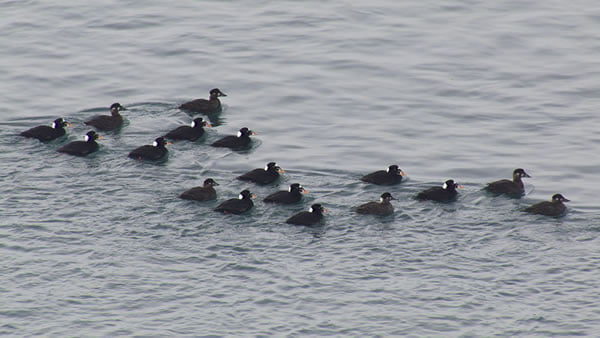
Surf Scoter Photo Gallery

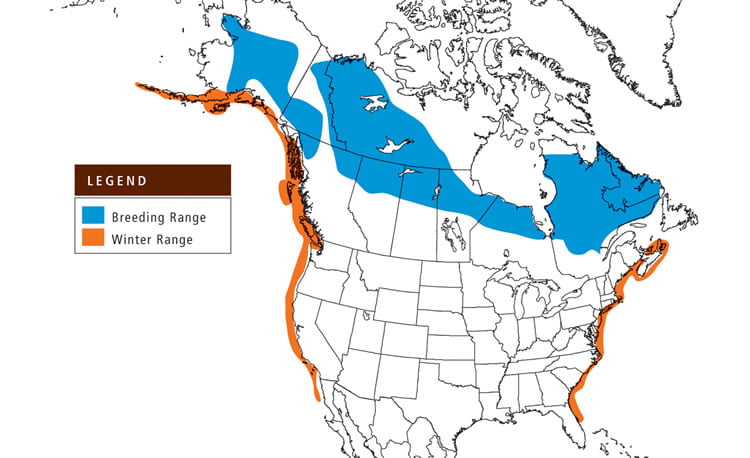
Surf Scoter Range Map