Sea Duck Joint Venture
Sea ducks are a large group of waterfowl that, relative to other waterfowl species, we know little about.
Some sea duck populations are declining or have lower numbers than they did historically, and they depend on sensitive coastal, arctic, and boreal habitats throughout the continent.
About the Sea Duck Joint Venture
We are a bi-national conservation partnership of organizations committed to maintaining sustainable populations of North American sea ducks throughout their ranges.
We promote the conservation of North American sea ducks through partnerships by providing greater knowledge and understanding for effective population and habitat conservation and management.
News

Band Recovery Reveals Common Eider Journey from Nunavut to Iceland
We have another story about sea duck band recovery! Eiderdown collectors in western Iceland took a video of a color-banded male Northern Common Eider in early June. This bird was banded by Grant Gilchrist’s research team on East Bay Island in Nunavut, Canada in 2023....

SDJV Fellowship Feature: Caroline Blommel
Meet Caroline Blommel, a PhD student at the University of Washington selected in 2026 for a SDJV Student Fellowship Award. With this fellowship, Caroline will develop a simulation-based framework for evaluating the long-term impacts of harvest regulations on Surf...

SDJV Student Fellowship Feature: Geneviève Gauthier
Meet Geneviève Gauthier, a Master’s student at Université Sainte-Anne selected in 2026 for the Sea Duck Joint Venture (SDJV) Student Fellowship Award. This fellowship will support her research on a Red-breasted Merganser (Mergus serrator) nesting colony on the Tern...

New Longevity Record Set by 21-Year-Old Black Scoter
Matt Heuvel traveled to Kodiak Island, Alaska, in December 2024 planning to participate in a Harlequin Duck hunt. He ended up harvesting the oldest Black Scoter on record. We appreciate that he shared this story with the Sea Duck Joint Venture. It highlights the...

SDJV Fellowship Feature: Steele Grasza
Meet Steele Grasza, a Master’s student at Queen’s University who received a 2026 Sea Duck Joint Venture (SDJV) Student Fellowship Award. Steele is using whole-genome sequencing to quantify the genomic health of Common Eiders (Somateria mollissima) who breed on Mitivik...

SDJV Student Fellowship Feature: Chandler Garcia
Meet Chandler Garcia, a PhD student at the University of Texas El Paso (UTEP) selected in 2026 for the Sea Duck Joint Venture Student Fellowship Award. Photos provided by Chandler Garcia. As part of his PhD dissertation, Chandler is conducting a population-level...
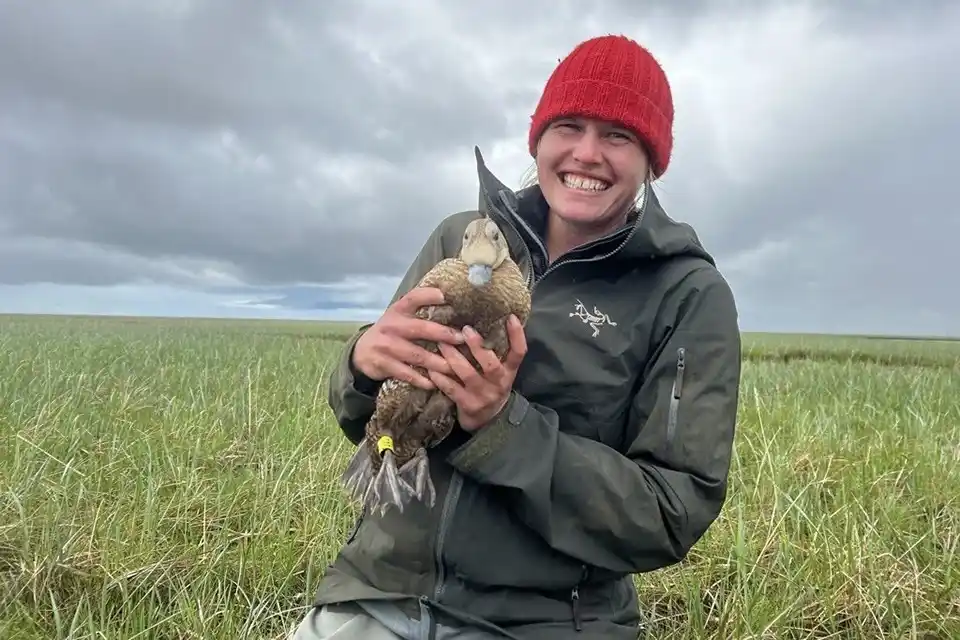
SDJV Student Fellowship Feature: Mairin Murphy
Meet Mairin Murphy, a PhD student selected in 2026 for the Sea Duck Joint Venture Student Fellowship Award. This fellowship will support Mairin’s research on interactions between predators and ground-nesting waterfowl in the Yukon-Kuskokwim Delta – specifically Common...

Celebrating Forty Years of Migratory Bird Joint Ventures
Did you know that 2026 marks the 40th anniversary of North American Migratory Bird Joint Ventures? Since the North American Waterfowl Management Plan called for their creation in 1986, the Joint Ventures have become widely accepted as the model for collaborative...
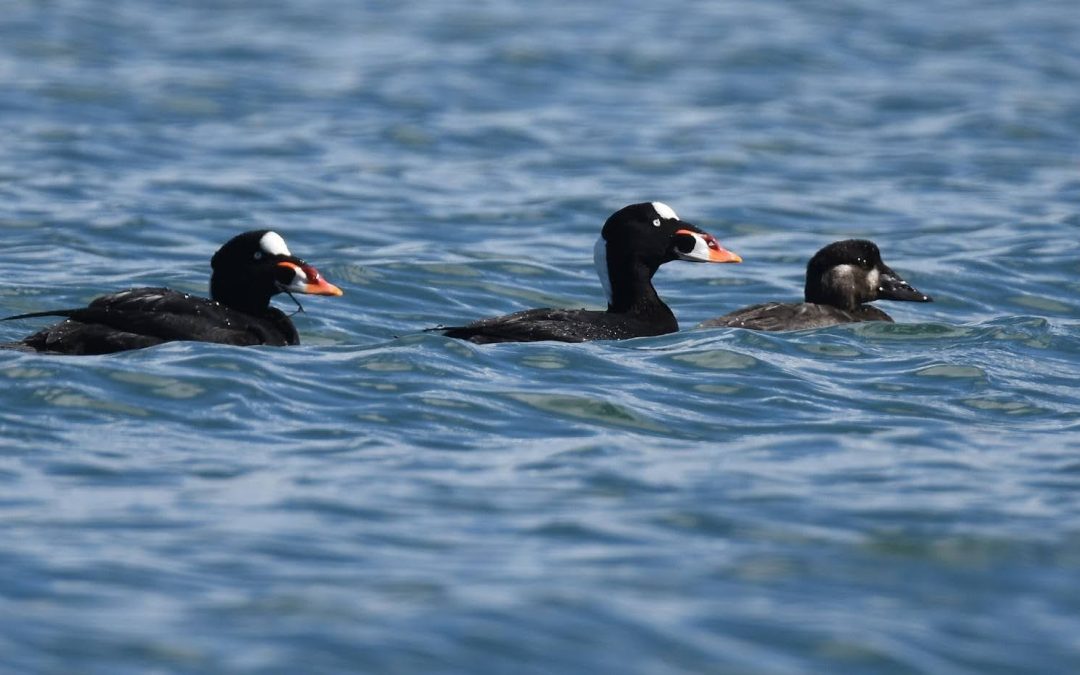
2026 Student Fellowship Awardees Announcement
Congratulations to the 2026 Student Fellowship Awardees! Learn more about the students whose research is moving sea duck conservation forward. Surf Scoters, one of the 15 extant species of sea ducks. This year's new Student Fellowship Awardees are: Caroline Blommel –...
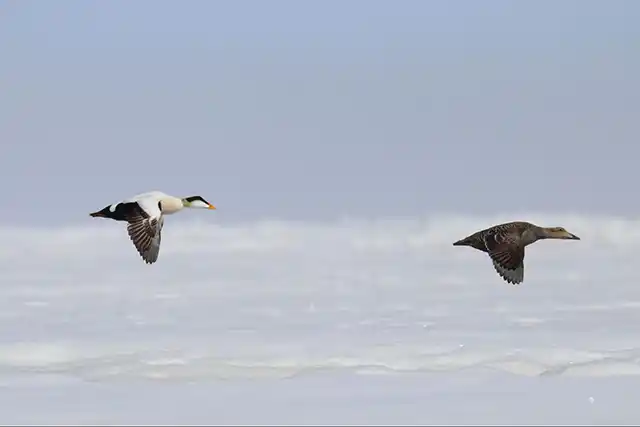
Assessing Hunting Pressure on Pacific Common Eiders in Chukotka and Yakutia, Russia
Every year, a large proportion of Pacific Common Eiders (Somateria mollissima) migrate from their Alaskan and Canadian breeding grounds to fall staging and wintering areas on the coast of Russia. Harvest rates across this region are poorly understood, making it...
Sea Duck Joint Venture Partner Organizations