
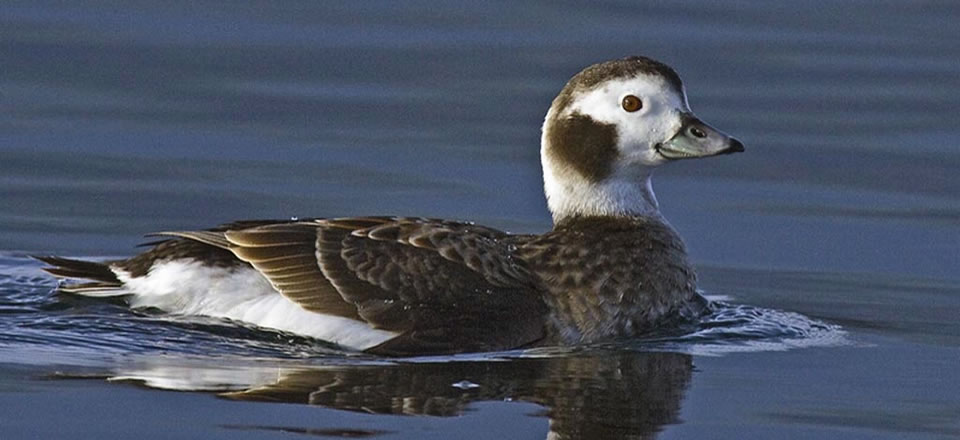
Long-tailed Duck
Clangula hyemalis
The breeding range of the Long-tailed Duck is extensive and occurs mostly outside of areas covered by most established waterfowl surveys, so there is very little information available to accurately and reliably quantify population size and trends for this species. The North American population of Long-tailed Duck has been crudely estimated at one million birds.
Sea Duck Information Series fact sheet
Long-tailed Duck: Species Knowledge Summary and Information Needs [PDF]
Long-tailed Duck Tracking Data
The Sea Duck Joint Venture has invested in numerous projects employing satellite and radio tracking devices to address pressing management-related questions. These data have enabled researchers to discover migratory pathways, delineate populations, and describe habitat use and behavior. This catalog includes existing tracking datasets for Long-tailed Ducks.
[invisible]
SDJV Project 130 — Atlantic and Great Lakes Sea Duck Migration Study
Project Summary: This large-scale satellite telemetry study aimed to fully describe the annual migration patterns for four species of sea ducks (Surf Scoters, Black Scoters, White-winged Scoters, and Long-tailed Ducks) in the Atlantic and Great Lake Flyways. As part of this project, Sea Duck Joint Venture partners implanted 48 Long-tailed Ducks with internal satellite transmitters between 2007 and 2012. Transmitter types included Microwave and Telonics PTTs. Collaborating organizations included the Canadian Wildlife Service, the U.S. Geological Survey Eastern Ecological Science Center, the University of Western Ontario, and Long Point Waterfowl. Capture locations included Lake Ontario (Ontario), Nantucket and Cape Cod (Massachusetts), and the Chesapeake Bay (Maryland and Virginia).
Tracking Data: Data will soon be available via Dryad.
Related Publications: Visit the SDJV Project 130 and Project 155 webpages for reports and publications.
SDJV Project 31 — Migration And Condition of Long-Tailed Duck Wintering in Eastern Canada
Project Summary: Environment and Climate Change Canada captured 48 Long-tailed ducks between 2003 and 2004 and implanted them with internal PTTs (Microwave). Capture locations included the Niagara River and Lake Ontario in Ontario, Canada. This study was designed to identify important migratory pathways, important staging areas, and breeding sites. The Canadian Wildlife Service and the U.S. Fish and Wildlife Service collaborated on this project.
Tracking Data: More information coming soon.
Related Publications: Visit the SDJV Project 31 and SDJV Project 130 for reports and related publications.
SDJV Project 23 — Characterization of Beaufort Sea Flyway: Long-tailed Ducks and Common Eider
Project Summary: This study used satellite telemetry to characterize migration and to identify wintering and staging areas for long-tailed ducks that molt in lagoons along the western Beaufort Sea coast. The U.S. Geological Survey (USGS) deployed 30 internal Microwave PTT transmitters in Long-tailed Ducks. All birds were captured at Point Thompson, Alaska.
Tracking Data: The USGS Alaska Science Center has released tracking data for Long-tailed Ducks at doi.org/10.5066/P95B6K20.
Related Publications: Visit the SDJV Project 23 webpage for reports and publications.
SDJV Project 2 — Identification of Beaufort Sea Migration Corridor for Sea Ducks
Project Summary: This study used satellite telemetry to study migration corridors for Common Eiders, King Eiders, and Long-tailed Ducks so that analysts could predict and mitigate adverse effects of offshore oil development in the Beaufort Sea. In 2009 and 2010, the Canadian Wildlife Service in collaboration with the U.S. Fish and Wildlife Service surgically implanted 56 Long-tailed Ducks with Microwave PTT transmitters. They suspended gill nets to capture the birds at a moulting location in McKinley Bay in the Northwest Territories.
Tracking Data: More information coming soon.
Related Publications: Visit the SDJV Project 2 webpage for reports and publications.
Contact: More information coming soon.
Post-breeding Distribution of Long-tailed Ducks (Clangula hyemalis) from the Yukon-Kuskokwim Delta, Alaska
Project Summary: The objectives of this study were to identify molting, staging, and wintering areas of adult female Long-tailed Ducks and determine the numbers of birds at these areas. Collaborating organizations include the U.S. Fish and Wildlife Service and the U.S. Geological Survey (USGS) Alaska Science Center. 14 Long-tailed Ducks were marked with VHF and satellite transmitters between 1998–1999 on the Yukon-Kuskokwim Delta in Alaska.
Tracking Data: Datasets are available in Movebank (ID 140391801) at doi.org/10.5441/001/1.1rc3hj8d. The USGS Alaska Science Center has also released an updated version of this dataset at doi.org/10.5066/P95B6K20.
Related Publications: Petersen MR, McCaffery BJ, Flint PL. 2003. Post-breeding distribution of long-tailed ducks Clangula hyemalis from the Yukon-Kuskokwim Delta, Alaska. Wildfowl. 54:103-113. pubs.usgs.gov/publication/70025260.
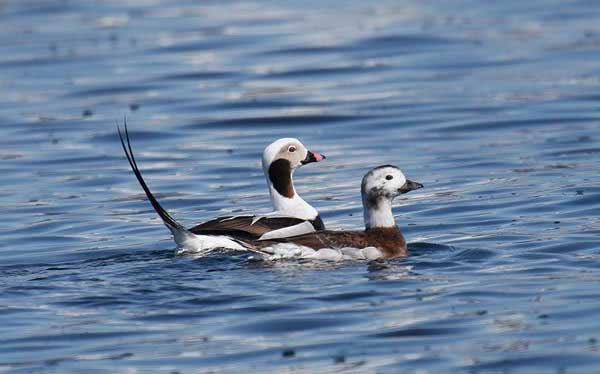
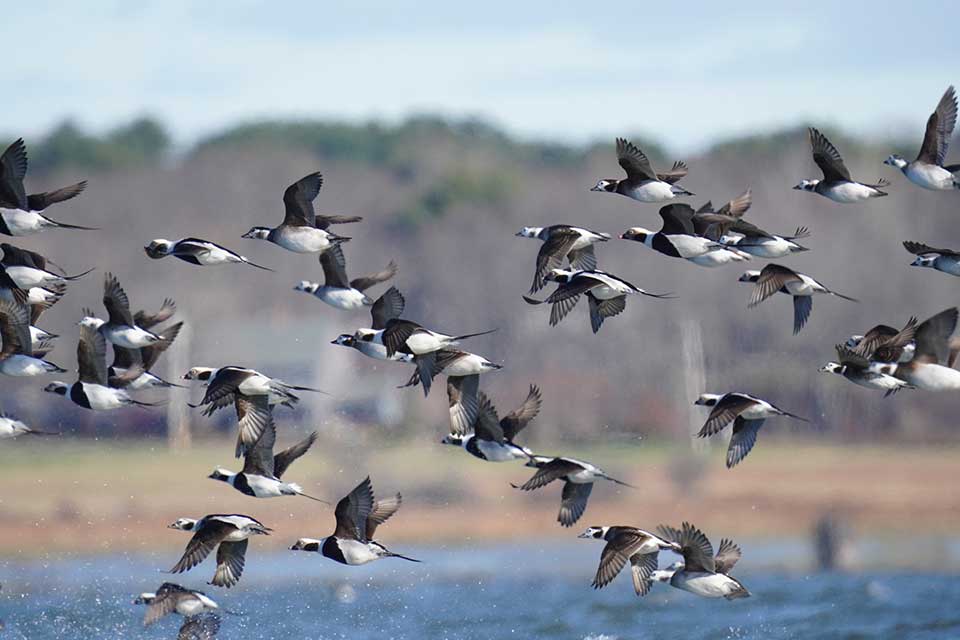
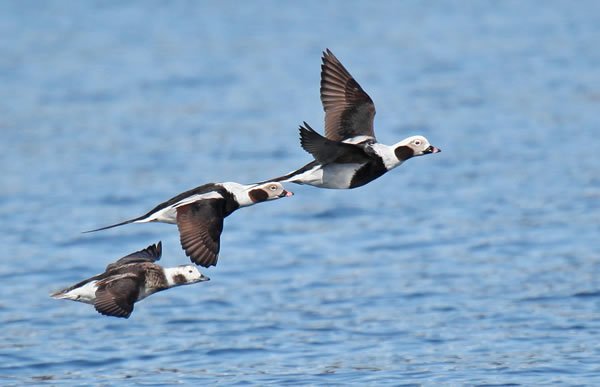
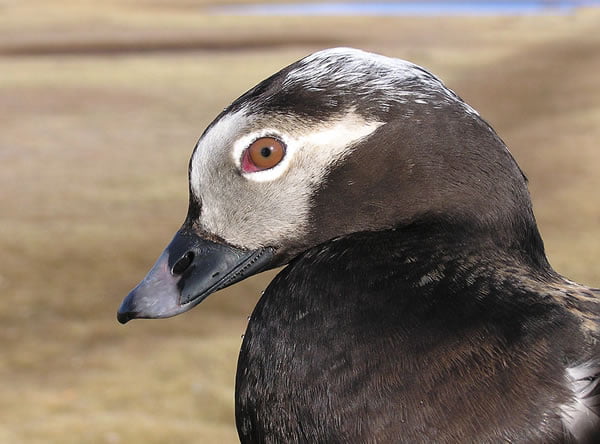
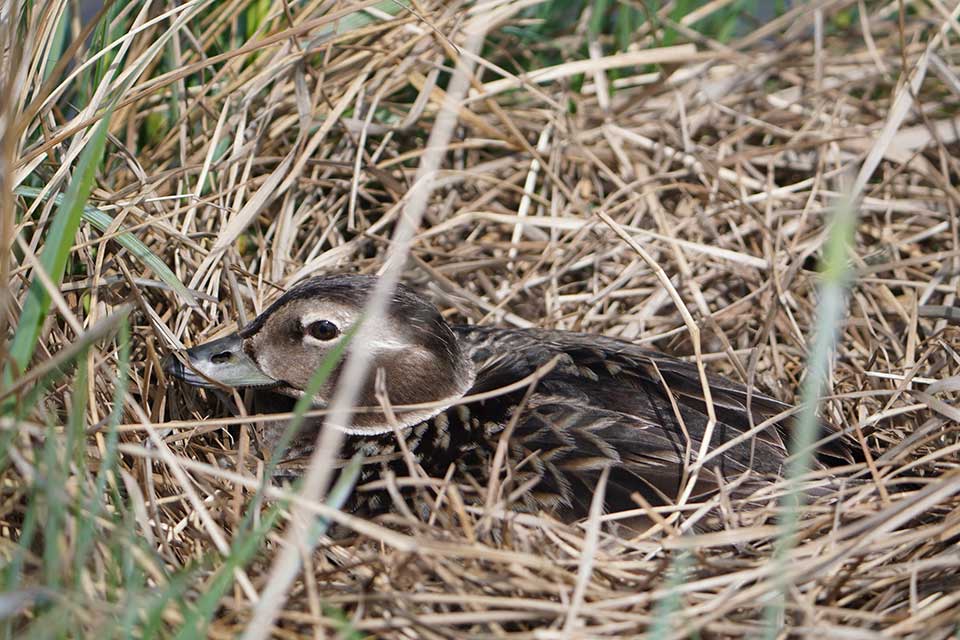
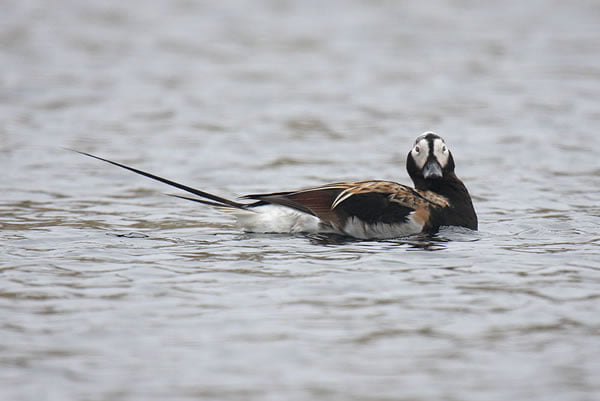
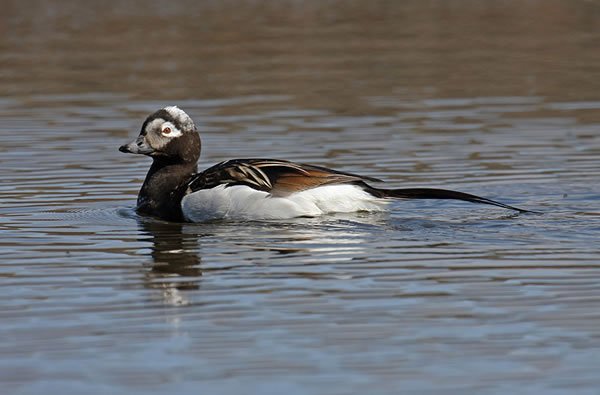
Long-tailed Duck Photo Gallery

Long-tailed Duck Range Map
