Black Scoter
Melanitta americana
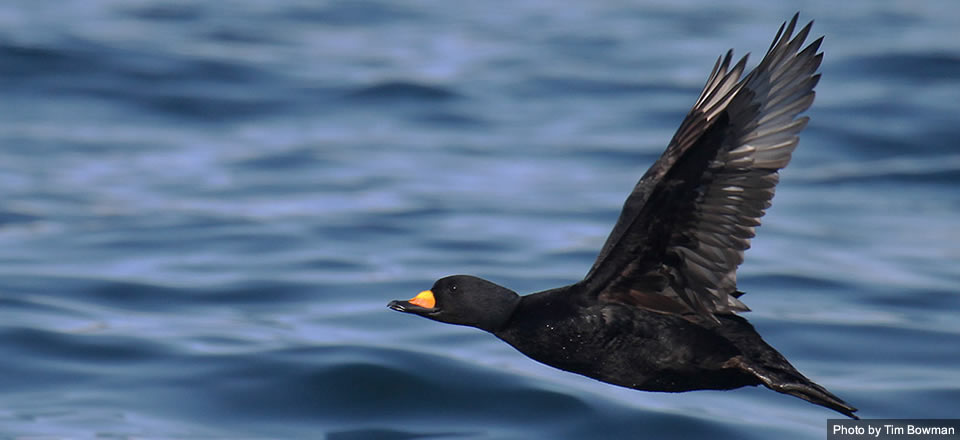
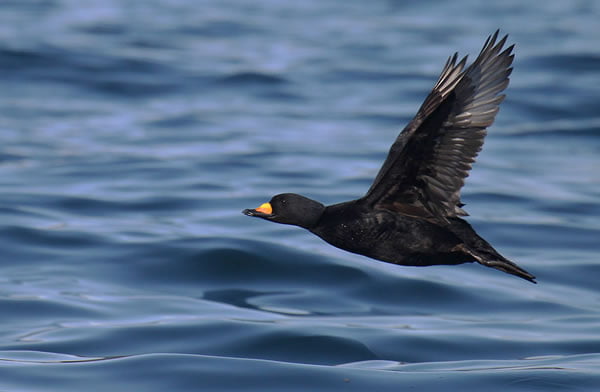
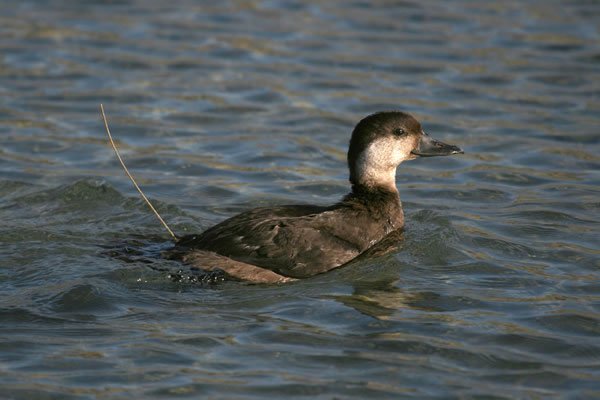
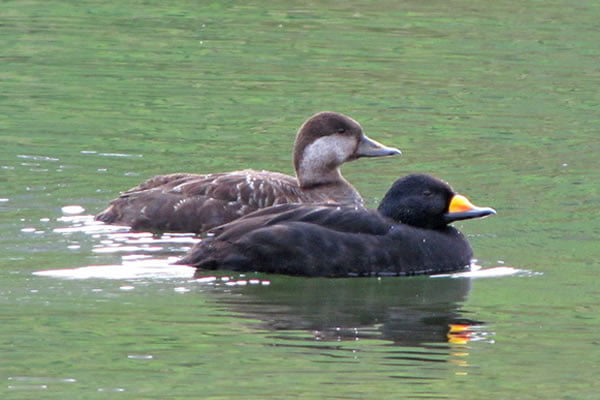
The black scoter is a medium-sized sea duck approximately 43–49 cm (17–19 in) long. Males are slightly larger than females and weigh 980– 1100 grams (2.2–2.4 lb). Males are solid black and have a yellow knob on their relatively small bill, whereas females are dark brown with a pale cheek patch and a dark crown. They retain the same plumage year-round. In flight, the undersides of their wings flash silvery gray in contrast to their dark bodies. Their wings make a whistling noise in flight. Males are very vocal and make a continuous mellow, plaintive whistling sound. Females make a low growling sound during courtship.
Sea Duck Information Series fact sheet [PDF]
Black Scoter Species Knowledge Summary and Information Needs [PDF]
Black Scoter Tracking Data
The Sea Duck Joint Venture has invested in numerous projects employing satellite and radio tracking devices to address pressing management-related questions. These data have enabled researchers to discover migratory pathways, delineate populations, and describe habitat use and behavior. This catalog includes existing tracking datasets for Black Scoters.
[invisible]
SDJV Project 130 — Atlantic and Great Lakes Sea Duck Migration Study
Project Summary: This large-scale satellite telemetry study aimed to fully describe the annual migration patterns for four species of sea ducks (Surf Scoters, Black Scoters, White-winged Scoters, and Long-tailed Ducks) in the Atlantic and Great Lake Flyways. As part of this project, SDJV partners from the Canadian Wildlife Service and the University of Rhode Island surgically implanted 110 Black Scoters with satellite transmitters (Microwave and Telonics) between 2009 and 2010. Several methods of capture were used to successfully and safely catch sea ducks, including over-water mist nets, net guns, nightlighting, and drive trapping molting birds into special gill nets, depending on the particular species and time of year. Capture locations included New Brunswick, Québec, and Rhode Island.
Tracking Data: Data will soon be available via Dryad and Movebank at (ID 2946190895).
Related Publications: Visit the SDJV Project 130 and SDJV Project 155 webpages for reports and publications.
SDJV Project 38 — Assessment of the Pacific Black Scoter Population: Population Size, Distribution, and Links Among Populations: An Integrated Approach
Project Summary: This study used population surveys, satellite telemetry, and genetics to determine population status and trends for Black Scoter and provide the necessary information for scientifically sound management decisions. Between 2003 and 2007, a research team led by the U.S. Fish and Wildlife Service surgically implanted 53 Black Scoters with Microwave PTT satellite transmitters in their breeding and winter ranges in Alaska. Other collaborating organizations included the U.S. Geological Survey (USGS), Simon Fraser University, the Canadian Wildlife Service, the National Park Service, and the Alaska Department of Fish and Game.
Tracking Data: The USGS Alaska Science Center has released tracking data for Black Scoters at doi.org/10.5066/P93EF3TH. Data are also available on Movebank (ID 1023074898).
Related Publications: The SDJV Project 38 webpage has reports and publications. Additional information from a similar study is available on the SDJV Project 21 webpage.
Black Scoter Photo Gallery
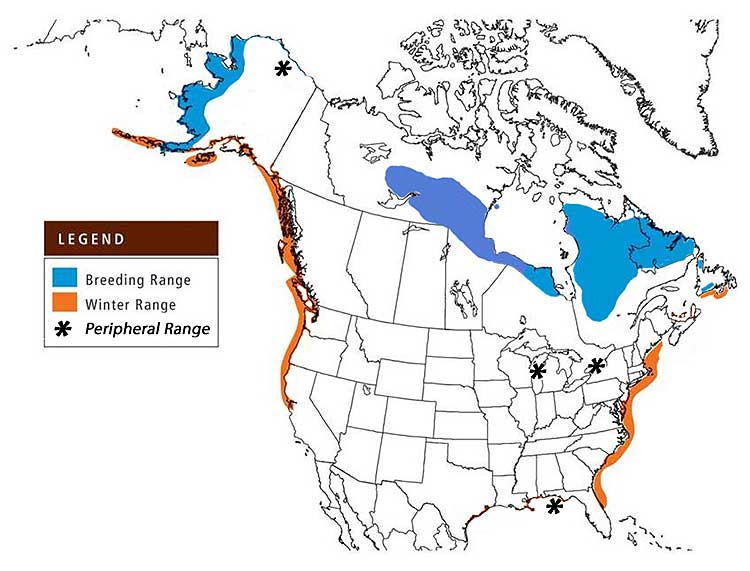
Black Scoter Range Map